In today’s Animal Nutrition Insights, Redox’s Animal Nutritionist Dr Yumin Bao shares information on Yeast Peptides and how their inclusion in animal feed can improve several conditions that often affect animal health.
Yeast peptide is a naturally occurring molecule with 19 unique amino acids, long lasso structure antimicrobial peptide from the bacteria Citrobacter braakii.
Usually, this peptide has been referred to as the host defence peptide to directly kill bacteria, yeasts, fungi and virus. Because this peptide exhibits a net positive charge and a high ratio of hydrophobic amino acids, it can selectively bind to negatively charged bacterial membranes and is able to cross the membrane to inhibit RNA synthesis, resulting in lysis of the targeted pathogens such as E.coli and Semolina.
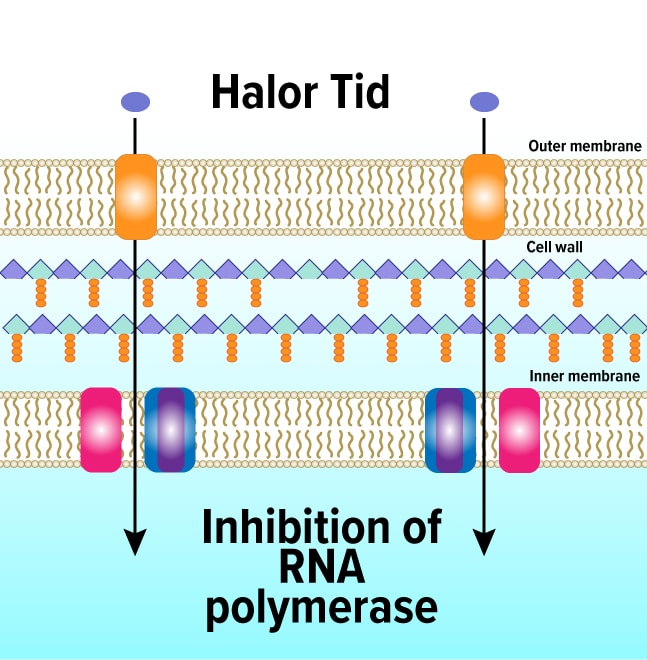
Therefore, different from antibiotics, it is difficult for pathogens to develop the resistance to this peptide since it would require drastic changes in the composition of membranes in targeted bacteria.
It has been demonstrated that the addition of this yeast peptide can improve several conditions in the below animals:
Weaning piglets with an average body weight at 7.98 kg for 28 days –
- significantly reduced diarrhoea incidence from 12.4% to 6.74%
- increase daily body weight gain by 7.1%
- feed conversion ratio by 8%.
Laying hens –
- increased egg production by 3.8%
- significantly reduced broken eggs and mortality rate.
In broiler chickens, compared with the antibiotic treatment, the combination of this yeast peptide and the acidifier significantly reduced the mortality rate and improved body weight gain by 8.4%. As well in ruminants such as lambs, this yeast peptide has the significant effect on the prevention of urethral calculus.
In a field trial study conducted in China, the incidence rate of urethral calculus in three farms were 5.56%, 4.55% and 1.45%, respectively, one week after using the yeast peptide, the incidence of urinary stone dropped to zero due probably to the fact that the yeast peptide reduces pathogens infections.
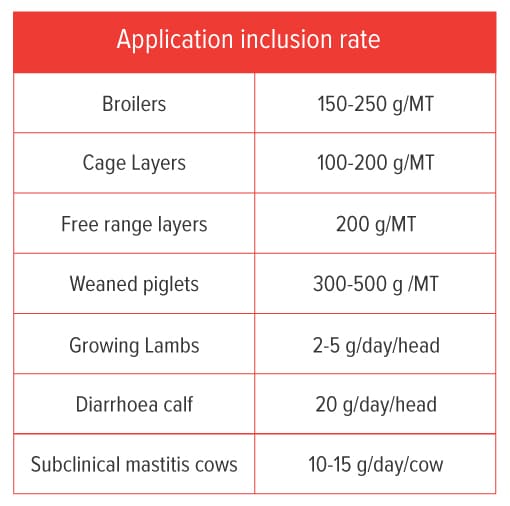
Want to know more? Contact one of our industry specialists and ask them today.