The global market for Chelated-Iron is largely driven by the challenges faced in the horticulture and agriculture sectors.
The problem is not that iron isn’t present in the soil. The problem is its bioavailability, or its ability to be absorbed by the plants. In fact, iron is a very abundant element within the earth’s surface. However, due to chemical interactions, iron is found in forms that plants cannot absorb across a wide range of soil types.
Being part of a wide range of micronutrients, it’s important to understand the genuine benefits of using Chelated-Iron in the agriculture and horticulture sectors. Iron is necessary for many enzyme functions in the plant. It is essential for chlorophyll formation and function, which provides the plant with oxygen and its green colour.
Another benefit of using Chelated-Iron is the prevention of iron deficiency in crops. Using targeted chelated iron applications on crops will reduce iron fixation and insoluble compounds forming and will increase iron bioavailability and plant uptake.
In several ways, Iron Chelates stand out against more traditional sources such as salts, with additional advantages like:
• greater solubility
• efficiency
• lower application rates.
The stand out advantage is that the iron found in chelates is protected against external interactions in the soil and water. Therefore, it will not interact with other components and form insoluble compounds and will remain available so that the roots can absorb it.
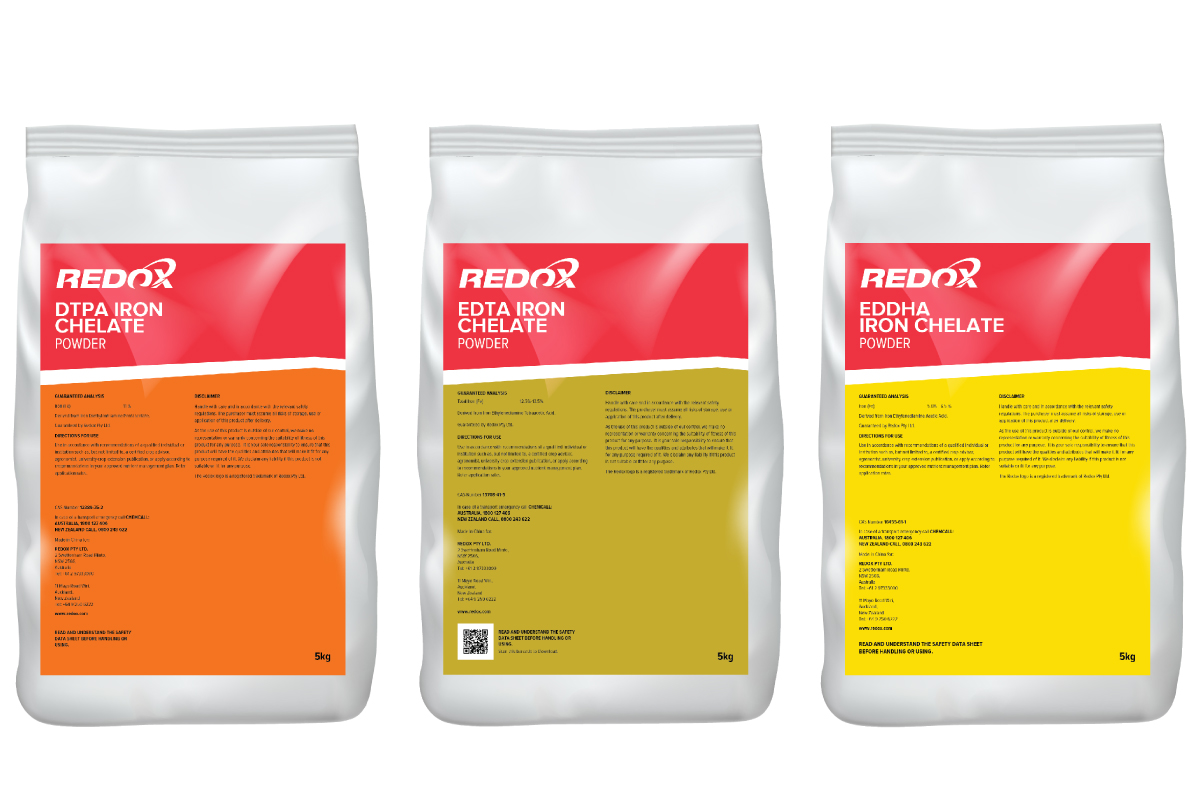
Redox supplies Chelated-Iron in a variety of packages to suit whatever scale our customers require.
Stock availability –
| Availability | Small Bags | 500 kg Bulk Bags |
| USA | 11 lb and 55.12 lb | On Request |
| Australia | 5 kg and 25 kg | On Request |
| New Zealand | 5 kg and 25 kg | On Request |
To find out more about Chelated-Iron, contact one of our industry specialists today.