Could reduced crude protein (CP) diets reduce NH3 emission by 25% in chicken or pig farms? In today’s Animal Nutrition Insights, Redox’s Animal Nutritionist Dr Yumin Bao shares his research on amino acids and feed enzymes supplementation that could help to reduce the environmental impacts of poultry and pig production.
Poultry and swine farming has a significant environmental impact on climate change and air or water pollution. In the past decade, phytase, a feed grade enzyme, has been widely used in poultry and swine production to reduce inorganic phosphorus usage and pollution significantly.
In recent years, the poultry and pig industry has successfully developed reduced crude protein (CP) diets by supplementing unbound crystalline L-Lysine, L-Methionine, L-Threonine, L-tryptophan, L-Valine, L-Isoleucine and L-Arginine, but not compromising chicken and pig performance. It is estimated that each 10 g/kg CP reduction in pig farms could reduce NH3 by 10%, and in poultry, each 15 g/kg CP reduction might reduce NH3 by 16% (Cappelaere et al., 2021).
Based on recent broiler chicken studies at the University of Sydney, apart from L-Lysine, L-Methionine and Threonine, L-Valine, L-Isoleucine, and L-Arginine are added to broiler chicken diets could further reduce CP by 15g/kg.
However, it is noticed that in the current CP reduction strategy, feed formulation was conducted by digestible lysine concentration and then balanced with other digestible amino acids, and undigested CP was not considered in the feed formulation.
It is well-known that adding exogenous feed enzymes in poultry and swine diets could overcome the adverse effects of antinutritional factors and improve the digestion of dietary nutrients.
While Xylanase is becoming a norm in Australian wheat-based diets to reduce digesta viscosity in chicken or pig gut, adding Protease and Mannase has recently been demonstrated to improve dietary amino acids digestibility by 3% and increase chicken body weight gain by 5%, respectively.
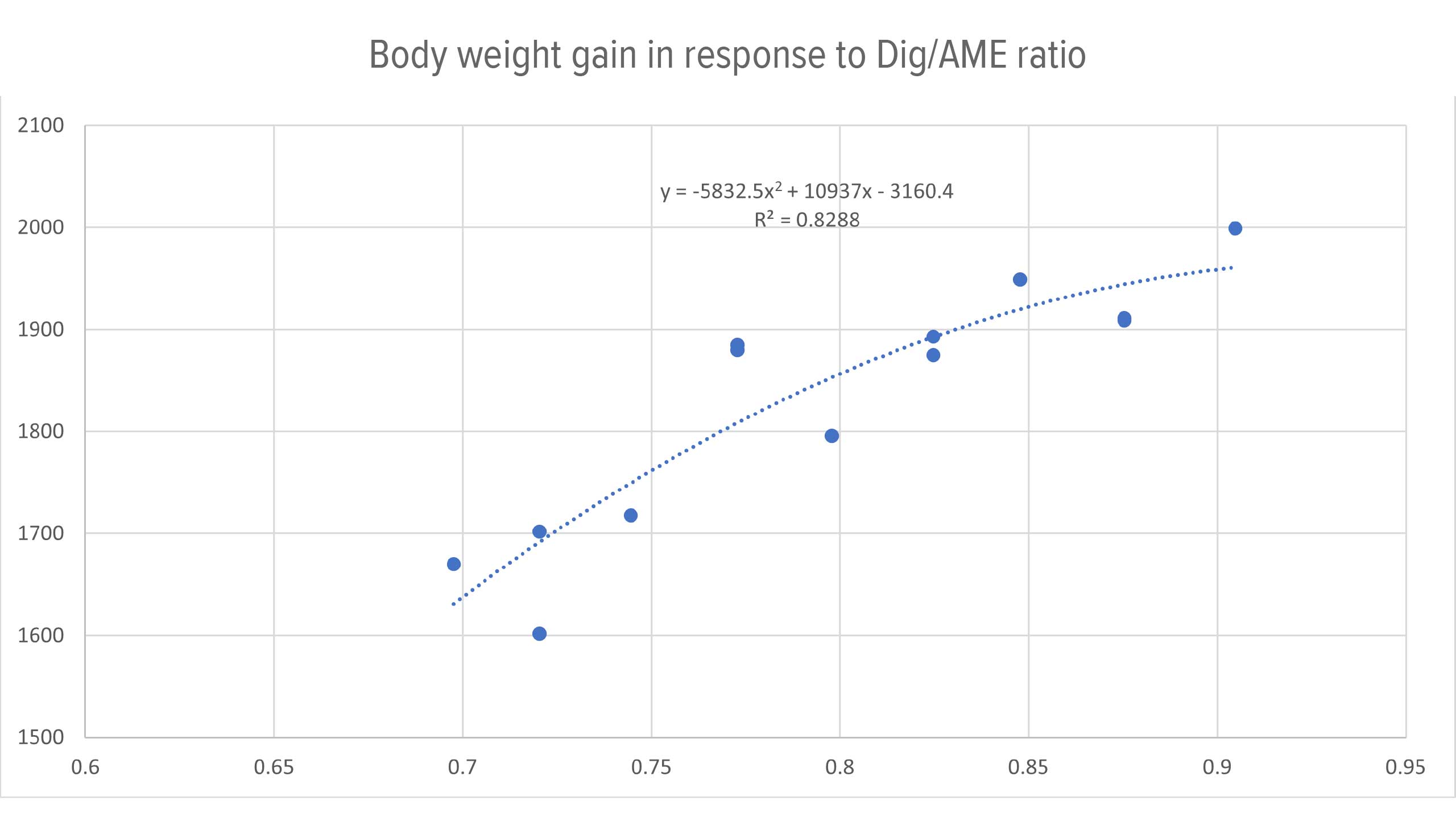
Body weight gain in response to Dig AME ratio
Therefore, under the current commercial conditions, adding protease and mannase could reduce Digestible Lysine concentration from 1.1% to 1.0% in the finisher period, roughly another 10-15 g/kg CP reduction.
In conclusion, in the current poultry and swine diets with supplementation of L-Lysine, L-methionine and L-Threonine, further adding L-Valine, L-isoleucine, L-Arginine, protease, and mannase could reduce at least 25 g/kg CP and accordingly reducing NH3 emission by 25% in chicken or pig farms.
Contact us today and ask us how we can assist with specialist advice from one of our nutritionists and offer the best price and service on any of the below products:
- L-Lysine, L-Methionine,
- L-Threonine,
- L-tryptophan,
- L-Valine,
- L-Isoleucine,
- L-Arginine,
- Xylanase,
- Protease,
- Mannase